
Using AI to express the ‘So what’ of data
Designing an AI-powered tool to bring 20 years of consultancy experience onto analytic dashboards.
Product: AI B2B SaaS | Role: End-to-end design process
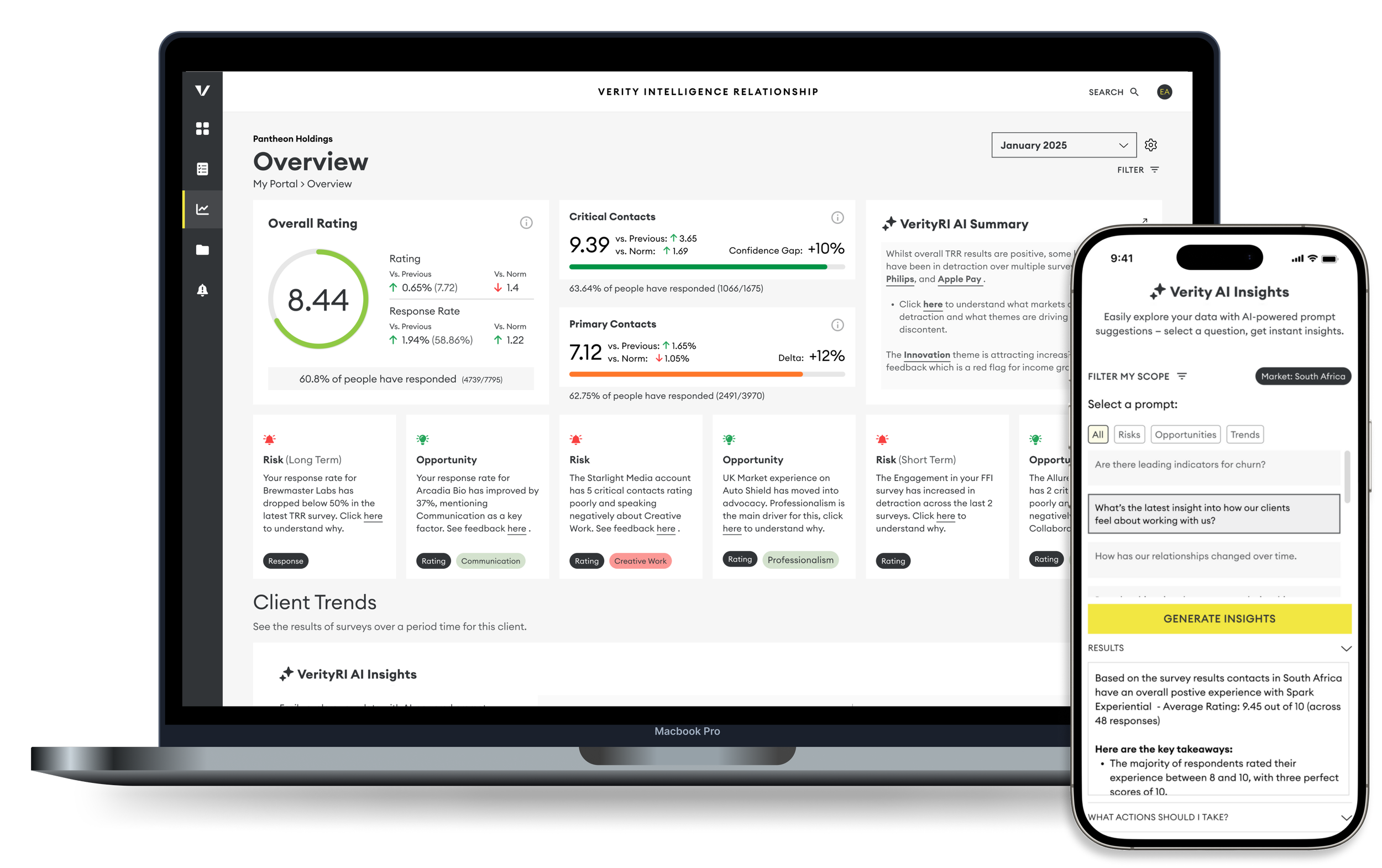
Overview
How can we help users move past raw survey data and to strategic guidance instantly? This project aimed to turn 20 years of consultancy frameworks and data into an AI-powered tool that provides actionable insights within our dashboards. I led the end-to-end design process, working closely with analytics, consultants, and early users.
Approach & Methods

Firstly, before I could design the interface, I immersed myself in the backend capabilities of our AI systems. I took an AWS course on AI and machine learning to understand the logic, tools, and feasibility behind what our data science team was building. This technical grounding helped me design with intent, not assumption.
To ensure alignment, I led biweekly working sessions with product, analytics, and consulting teams. These cross-functional reviews were key to maintaining the integrity of our consultancy voice—this couldn’t be just another AI plugin. The tool had to reflect our frameworks, benchmarking and uphold the trust clients place in us. We were especially mindful that any automated insight must support, not jeopardise, client relationships
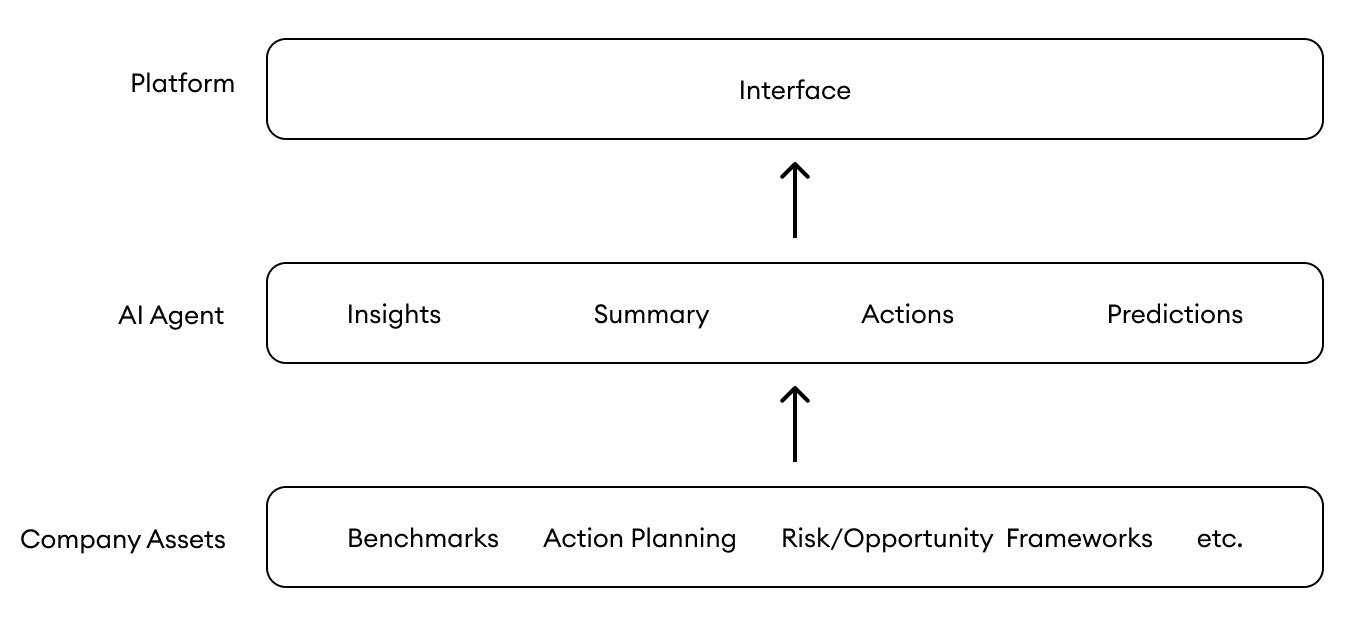
I also interviewed users to uncover how they currently worked with survey data: what they understood easily, where they hit friction, and how they were already experimenting with AI regarding the survey data we provided them. These conversations highlighted major pain points in existing dashboards and shaped key interface decisions.
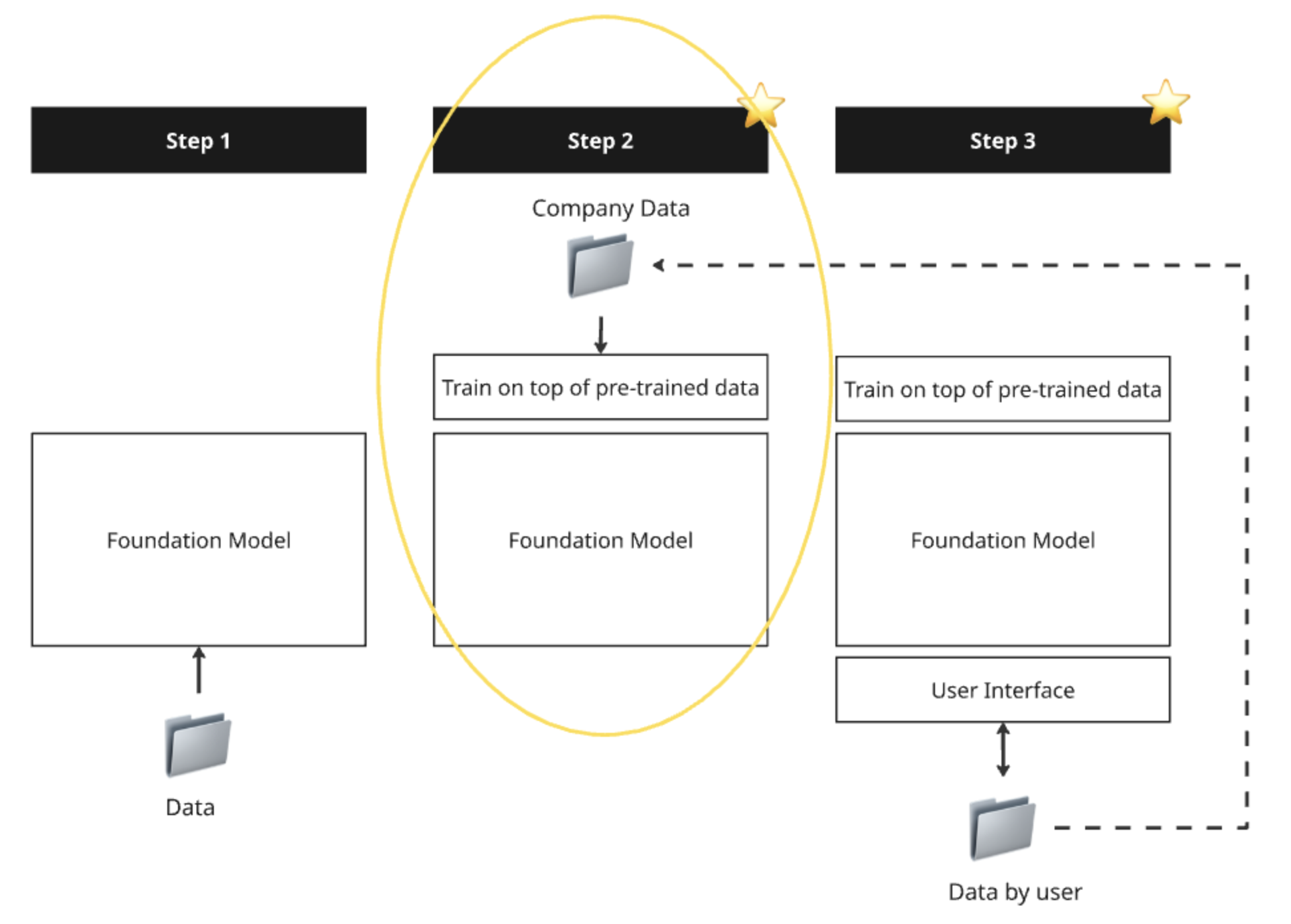
Training the model
The biweekly session evolved into training the model. With a huge help from the insights team, we trained the model by using reinforcement learning.
Internal tool we used for reinforcement learning:
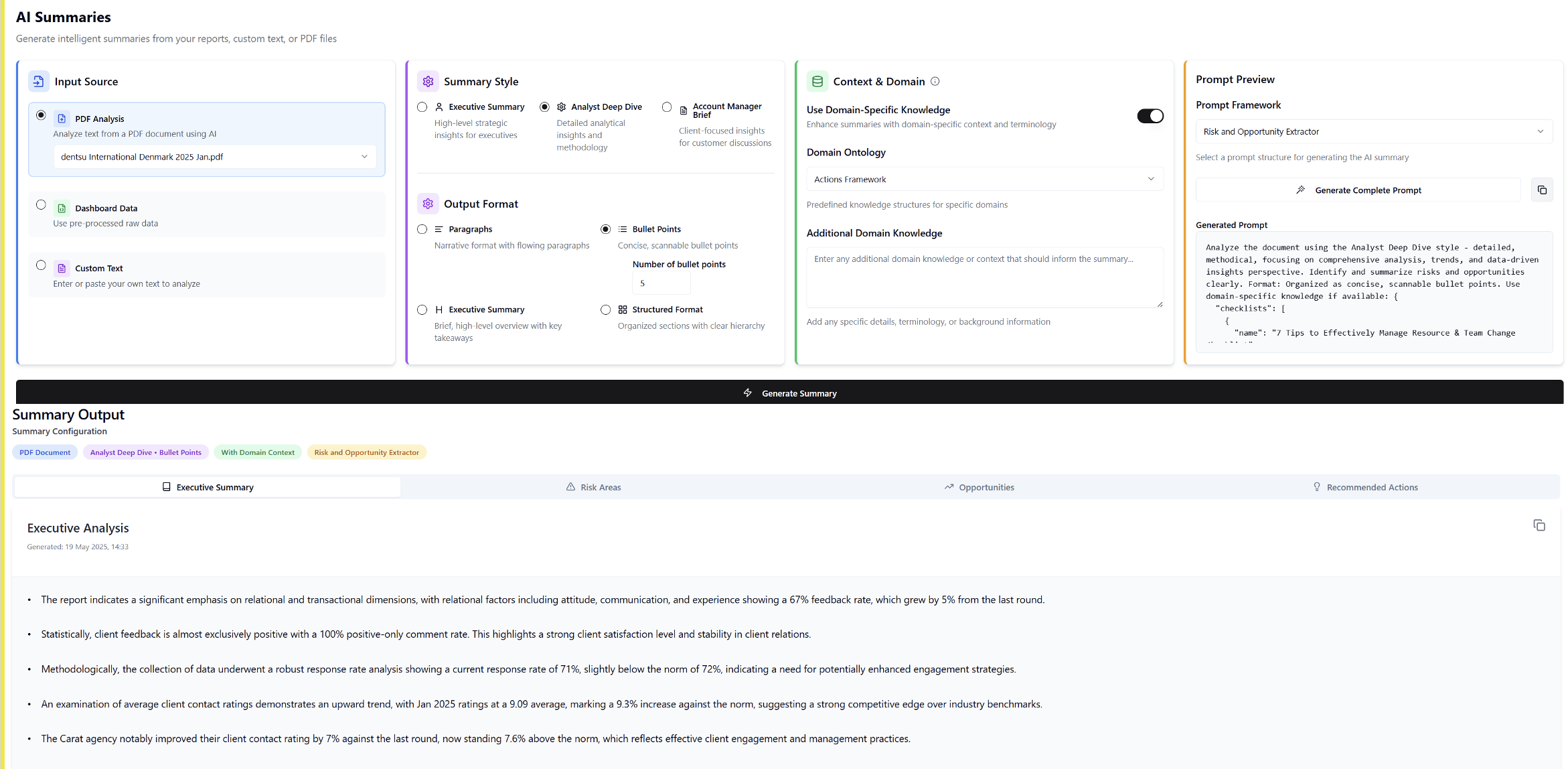
Part way throug training I gained enough clarity to begin designing the interface that would be available on the dashboard
Results & Impact
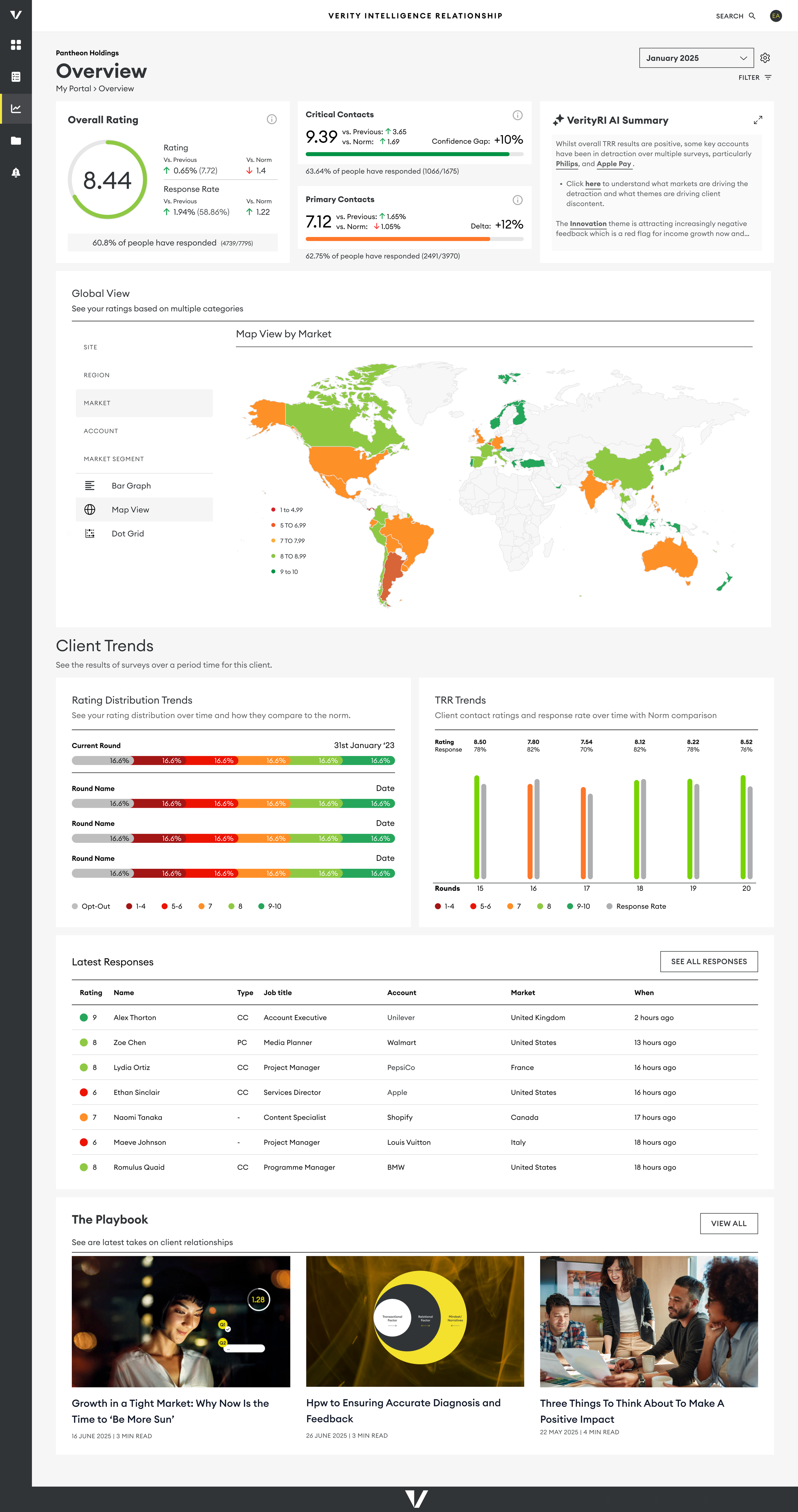
I designed an interface that provides users with instant summaries of their data upon landing on the dashboard, along with an intuitive section for exploring deeper insights through guided prompts and easy data filtering. We launched a beta version to a select group of early adopters, enabling them to ask questions about their data and receive rich, contextualised insights. These insights draw on the company’s 20 years of expertise and are delivered in our consultants’ tone of voice, enhancing clarity, trust, and engagement.
‘Getting these kinds of insights without waiting for our quarterly relationship review with consultants is a game changer.’ — Early Beta User
High-level AI powered summary displayed on the dashboard landing page.
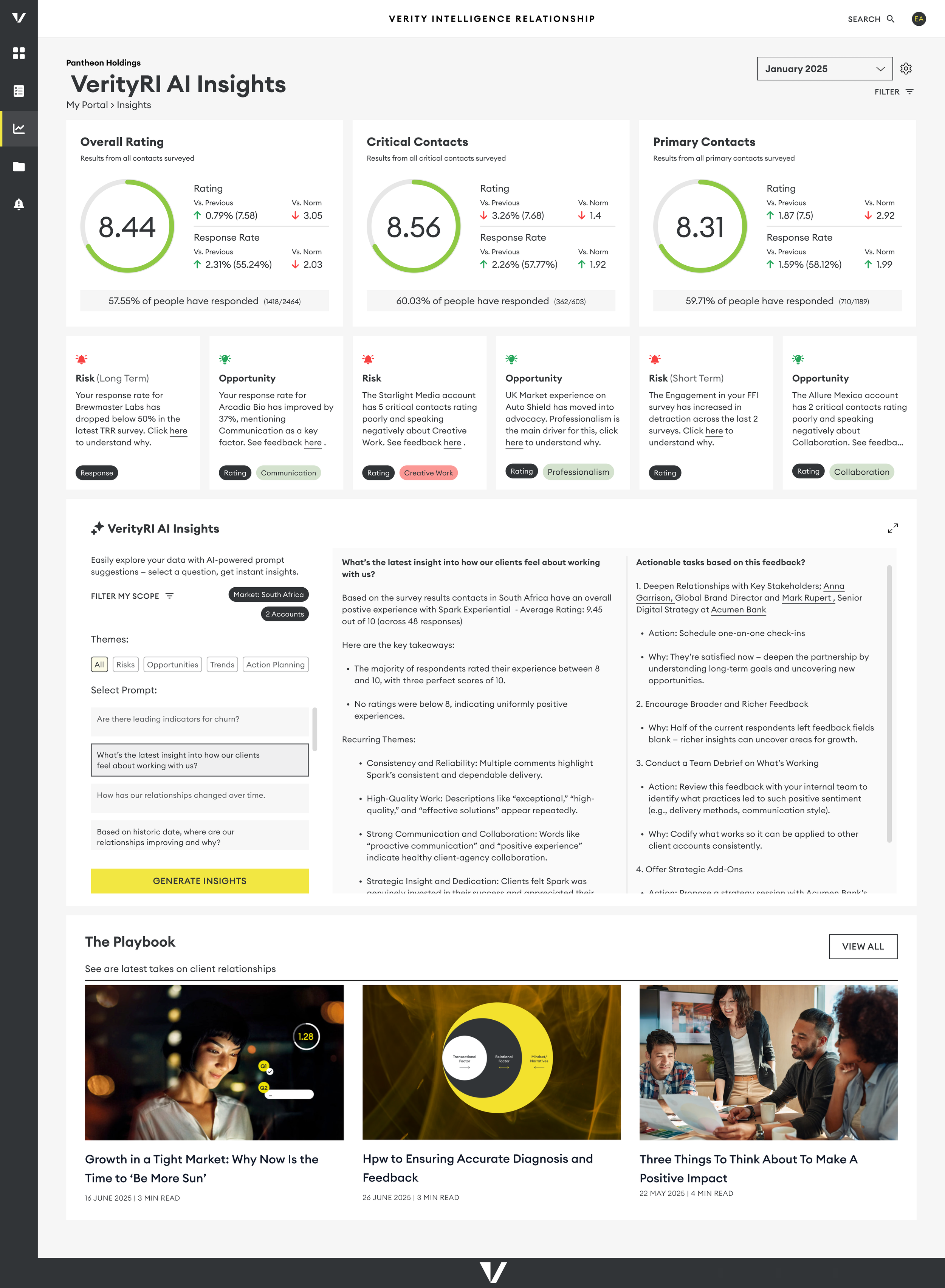
A dedicated page to gain AI-powered insights tailored to specific questions about selected accounts and markets.
Learnings & Next Steps
Collaboration is Key
Through continuous collaboration, curiosity, and shared learning, we created something that feels both ambitious and grounded. The partnership between design, data, and engineering was what made real progress possible.
Understanding Limitations
Recognising the AI agent’s technical and cost constraints was essential to shaping a practical and intuitive interface. As designers, the earlier we can engage with the system and understand what drives the machine learning process, the stronger and more informed our design decisions become.
Outcomes
We’re continuing to refine the tool based on feedback from early adopters and plan to expand access soon. This project reinforced the value of designing at the intersection of innovation and usability, translating complexity into clarity.
Looking Ahead
Future iterations will focus on empowering users to generate dynamic graphs and visualisations directly within the tool.
The biggest takeaway? A clearer understanding of how design contributes to the evolving AI ecosystem, not just shaping interfaces, but guiding how humans and intelligent systems think, interact, and learn together!
" In the pre-software age, the only thing designers had to worry about was how a product was built. But in the post-software era, we have to think about how the product will behave..."
- Ovetta Sampson and Tim Brown